Lava cannot ignite certain flammable blocks
The bug
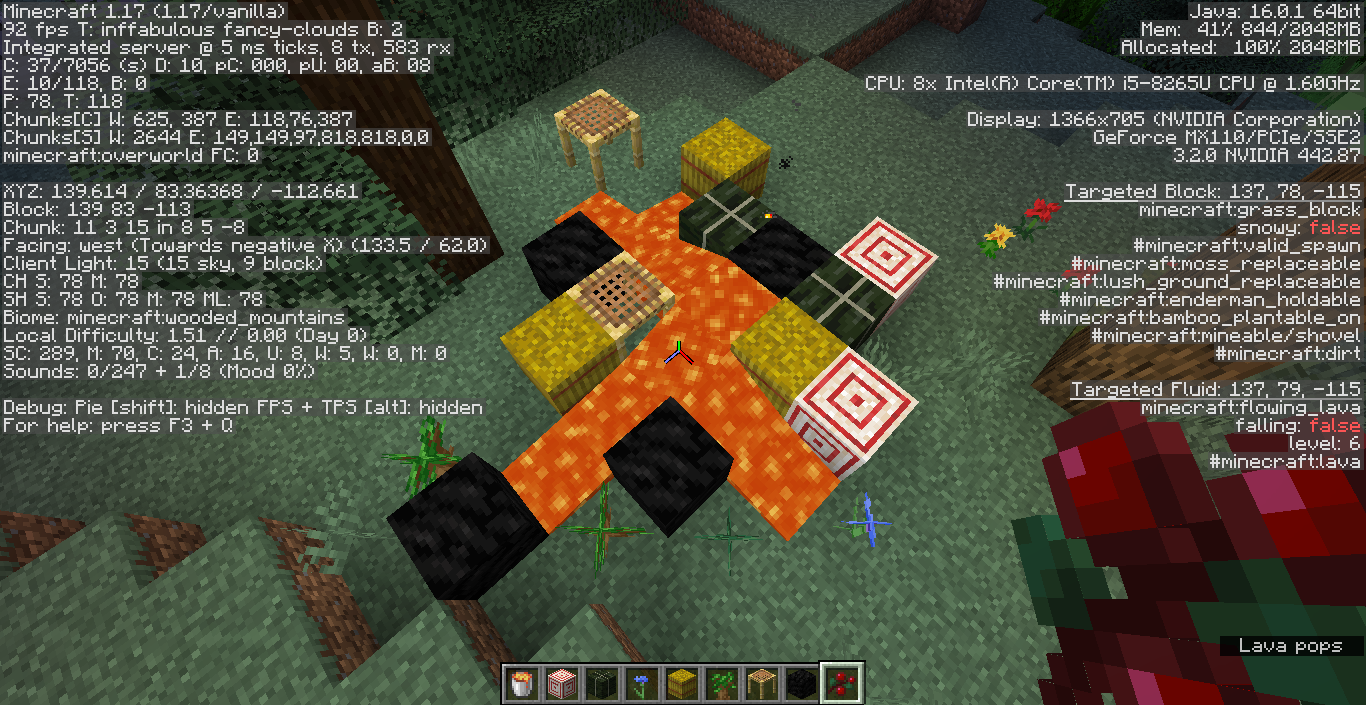
Lava cannot light the following (otherwise flammable) blocks on fire:
- coal blocks
- hay bales
- dried kelp blocks
- small flowers
- sweet berry bushes
- scaffolding
- targets
- saplings
- azalea
- cave vines
- dripleaf
- hanging roots
- spore blossoms
- hanging signs
- pink petals
glow lichenFixed
How to reproduce
- Place lava somewhere without existing flammable blocks to spread fire to.
- Place coal blocks anywhere in, around, or above the lava, with air blocks adjacent where fire should be able to light.
- Watch the coal never burn.
- Increase the rate of fire spread 100x, using /gamerule randomTickSpeed 300, just to be sure.
Code analysis – MCP 9.35 (1.11) names
It's because lava and fire use different ways to tell if a block is flammable:
1.
Lava (net.minecraft.block.BlockStaticLiquid) decides whether to light a block on fire by consulting the block's Material, by calling net.minecraft.block.material.getCanBurn(World worldIn, BlockPos pos).
Coal is Material.ROCK, hay and dried kelp blocks are Material.GRASS, and 1-block flowers are Material.PLANTS. These materials will tell lava that those blocks cannot burn.
Incidentally, this is the only place .getCanBurn() is used.
2.
Fire (net.minecraft.block.BlockFire) decides whether to spread to a block by consulting its own hard-coded list of burnable blocks, by calling its own method .canCatchFire(IBlockAccess worldIn, BlockPos pos) – and this has nothing whatsoever to do with block material.
Coal, hay, dried kelp and the flowers are all on that list.
Incidentally also, that is the only place .canCatchFire() is used.
Linked Issues
is blocked by1
is duplicated by1
relates to4
 MC-3263Several blocks made of wood (Signs, Ladders, Chests, Trapdoors, Doors...) won't burn
 LowMC-234622All blocks that can be waterlogged cannot be destroyed by flowing lavaConfirmedMC-204973Lava cauldron is not spreading fire on flammable blocksWorks As IntendedMC-262459Chiseled bookshelves do not burn even though they can be used as fuel in furnaceWorks As Intended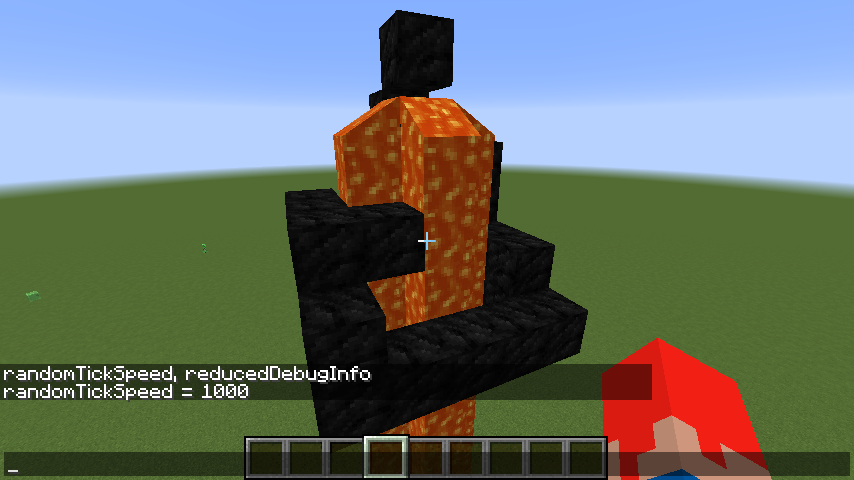
![[Mod] ampolive](../../../data/avatars/users/18949.svg)


- Unresolved
 Callum Milne
- 25
- 11
- Confirmed
- Low
- Gameplay
- Block states
- burning coal_block dried_kelp_block fire flower hay_bale lava scaffolding sweet_berry_bush target
1.10.2 - 1.21.3
1.10.2 1.11-pre1 1.11 1.11.2 17w06a 17w16b 1.12 18w02a 18w07a 18w07b 18w07c 1.13-pre1 1.13 18w30b 1.13.1 19w36a 1.15-pre3 1.15.2 20w13b 20w17a 20w21a 1.16-pre5 1.16-pre8 20w28a 1.16.2 1.16.4 20w45a 20w46a 20w51a 21w03a 21w05b 21w06a 21w16a 1.17 1.17.1-pre2 1.17.1 21w44a 1.18-rc3 22w03a 22w15a 22w45a 1.19.3 1.20-pre1 1.20.1 1.20.2-pre2 23w44a 23w45a 24w09a 1.21.1 1.21.3
Created Issue:
Lava cannot ignite coal blocks
Lava blocks (flowing or source) cannot currently place fire next to coal blocks. Fire blocks can spread to coal blocks as with other flammable blocks, but lava blocks cannot.
Steps to Reproduce:
1. Place lava somewhere without existing flammable blocks to spread fire to.
2. Place coal blocks anywhere in, around, or above the lava, with air blocks next to them that should be able to become fire.
3. Watch the coal never burn.Environment
Put your operating system (Windows 7, Windows XP, OSX) and Java version if you know it here
Attachments1
![[Mod] Neko](../../../data/avatars/users/92901.png)
Put your operating system (Windows 7, Windows XP, OSX) and Java version if you know it here
Lava blocks (flowing or source) cannot currently place fire next to coal blocks, hay bales or 1-block flowers. Fire blocks can spread to coal blocks as with other flammable blocks, but lava blocks cannot.
Steps to Reproduce:
1. Place lava somewhere without existing flammable blocks to spread fire to.
2. Place coal blocks anywhere in, around, or above the lava, with air blocks next to them that should be able to become fire.
3. Watch the coal never burn.
Lava cannot ignite coal blocks / hay bales / 1-block flowers
relates to
Lava blocks (flowing or source) cannot currently place fire next to coal blocks, hay bales or 1-block flowers. Fire blocks can spread to coal blocks as with other flammable blocks, but lava blocks cannot.
Steps to Reproduce:
1. Place lava somewhere without existing flammable blocks to spread fire to.
2. Place coal blocks anywhere in, around, or above the lava, with air blocks next to them that should be able to become fire.
3. Watch the coal never burn.Issue:
Lava blocks cannot currently place fire next to coal blocks, hay bales or 1-block flowers. Fire blocks can spread to those blocks as with other flammable blocks, but lava blocks cannot start fires on them.Steps to Reproduce:
1. Place lava somewhere without existing flammable blocks to spread fire to.
2. Place coal blocks anywhere in, around, or above the lava, with air blocks next to them that should be able to become fire.
3. Watch the coal never burn.Analysis: – MCP 9.35 (1.11) names
net.minecraft.block.BlockStaticLiquid (Lava) decides whether to set fire based on the net.minecraft.block.material.getCanBurn(World worldIn, BlockPos pos) of the blocks in range. This is the only place .getCanBurn() is used.
Coal is Material.ROCK, and hay is Material.GRASS, which are materials that do not burn.
1-block flowers BlockYellowFlower and BlockRedFlower are Material.PLANTS (others of which are nether wart, cocoa, reeds, etc.), which do not burn – whereas double flowers BlockDoublePlant are Material.VINE, which is burnable (and incidentally, replaceable)
Further, the reason these all would burn away if actually set on fire is because of the method: net.minecraft.block.BlockFire.canCatchFire(IBlockAccess worldIn, BlockPos pos), which consults a set of burnable blocks that only BlockFire knows about, and which has nothing whatsoever to do with block material. And, that is the only place .canCatchFire() is used.
Issue:
Lava blocks cannot currently place fire next to coal blocks, hay bales or 1-block flowers. Fire blocks can spread to those blocks as with other flammable blocks, but lava blocks cannot start fires on them.Steps to Reproduce:
1. Place lava somewhere without existing flammable blocks to spread fire to.
2. Place coal blocks anywhere in, around, or above the lava, with air blocks next to them that should be able to become fire.
3. Watch the coal never burn.Analysis: – MCP 9.35 (1.11) names
It's because there are two different methods of determining whether a thing is flammable:
net.minecraft.block.BlockStaticLiquid (Lava) decides whether to set fire based on the net.minecraft.block.material.getCanBurn(World worldIn, BlockPos pos) of the blocks in range. This is the only place .getCanBurn() is used.
Coal is Material.ROCK, and hay is Material.GRASS, which are materials that do not burn.
1-block flowers BlockYellowFlower and BlockRedFlower are Material.PLANTS (others of which are nether wart, cocoa, reeds, etc.), which do not burn – whereas double flowers BlockDoublePlant are Material.VINE, which is burnable (and incidentally, replaceable)
Further, the reason these all would burn away if actually set on fire is because of the method: net.minecraft.block.BlockFire.canCatchFire(IBlockAccess worldIn, BlockPos pos), which consults a set of burnable blocks that only BlockFire knows about, and which has nothing whatsoever to do with block material. And, that is the only place .canCatchFire() is used.
Issue:
Lava blocks cannot currently place fire next to coal blocks, hay bales or 1-block flowers. Fire blocks can spread to those blocks as with other flammable blocks, but lava blocks cannot start fires on them.Steps to Reproduce:
1. Place lava somewhere without existing flammable blocks to spread fire to.
2. Place coal blocks anywhere in, around, or above the lava, with air blocks next to them that should be able to become fire.
3. Watch the coal never burn.Analysis: – MCP 9.35 (1.11) names
It's because there are two different methods of determining whether a thing is flammable:
net.minecraft.block.BlockStaticLiquid (Lava) decides whether to set fire based on the net.minecraft.block.material.getCanBurn(World worldIn, BlockPos pos) of the blocks in range. This is the only place .getCanBurn() is used.
Coal is Material.ROCK, and hay is Material.GRASS, which are materials that do not burn.
1-block flowers BlockYellowFlower and BlockRedFlower are Material.PLANTS (others of which are nether wart, cocoa, reeds, etc.), which do not burn – whereas double flowers BlockDoublePlant are Material.VINE, which is burnable (and incidentally, replaceable)
Further, the reason these all would burn away if actually set on fire is because of the method: net.minecraft.block.BlockFire.canCatchFire(IBlockAccess worldIn, BlockPos pos), which consults a set of burnable blocks that only BlockFire knows about, and which has nothing whatsoever to do with block material. And, that is the only place .canCatchFire() is used.Issue:
Lava blocks cannot currently place fire next to coal blocks, hay bales or 1-block flowers. Fire blocks can spread to those blocks as with other flammable blocks, but lava blocks cannot start fires on them.Steps to Reproduce:
1. Place lava somewhere without existing flammable blocks to spread fire to.
2. Place coal blocks anywhere in, around, or above the lava, with air blocks next to them that should be able to become fire.
3. Watch the coal never burn.Analysis: – MCP 9.35 (1.11) names
It's because there are two different methods of determining whether a thing is flammable:
1.
net.minecraft.block.BlockStaticLiquid (Lava) decides whether to set fire based on the net.minecraft.block.material.getCanBurn(World worldIn, BlockPos pos) of the blocks in range. This is the only place .getCanBurn() is used.Coal is Material.ROCK, and hay is Material.GRASS, which are materials that do not burn.
1-block flowers BlockYellowFlower and BlockRedFlower are Material.PLANTS (others of which are nether wart, cocoa, reeds, etc.), which do not burn – whereas double flowers BlockDoublePlant are Material.VINE, which is burnable (and incidentally, replaceable)
2.
The reason these all would burn away if actually set on fire is because of the method: net.minecraft.block.BlockFire.canCatchFire(IBlockAccess worldIn, BlockPos pos), which consults a set of burnable blocks that only BlockFire knows about, and which has nothing whatsoever to do with block material. And, that is the only place .canCatchFire() is used.
![[Mod] Michael Wobst](../../../data/avatars/users/37868.png)
Issue:
Lava blocks cannot currently place fire next to coal blocks, hay bales or 1-block flowers. Fire blocks can spread to those blocks as with other flammable blocks, but lava blocks cannot start fires on them.Steps to Reproduce:
1. Place lava somewhere without existing flammable blocks to spread fire to.
2. Place coal blocks anywhere in, around, or above the lava, with air blocks next to them that should be able to become fire.
3. Watch the coal never burn.Analysis: – MCP 9.35 (1.11) names
It's because there are two different methods of determining whether a thing is flammable:
1.
net.minecraft.block.BlockStaticLiquid (Lava) decides whether to set fire based on the net.minecraft.block.material.getCanBurn(World worldIn, BlockPos pos) of the blocks in range. This is the only place .getCanBurn() is used.Coal is Material.ROCK, and hay is Material.GRASS, which are materials that do not burn.
1-block flowers BlockYellowFlower and BlockRedFlower are Material.PLANTS (others of which are nether wart, cocoa, reeds, etc.), which do not burn – whereas double flowers BlockDoublePlant are Material.VINE, which is burnable (and incidentally, replaceable)
2.
The reason these all would burn away if actually set on fire is because of the method: net.minecraft.block.BlockFire.canCatchFire(IBlockAccess worldIn, BlockPos pos), which consults a set of burnable blocks that only BlockFire knows about, and which has nothing whatsoever to do with block material. And, that is the only place .canCatchFire() is used.
The bug
Lava blocks cannot currently place fire next to coal blocks, hay bales or 1-block flowers. Fire blocks can spread to those blocks as with other flammable blocks, but lava blocks cannot start fires on them.
To reproduce
1. Place lava somewhere without existing flammable blocks to spread fire to.
2. Place coal blocks anywhere in, around, or above the lava, with air blocks next to them that should be able to become fire.
3. Watch the coal never burn.Code analysis – MCP 9.35 (1.11) names
It's because there are two different methods of determining whether a thing is flammable:
1.
net.minecraft.block.BlockStaticLiquid (Lava) decides whether to set fire based on the net.minecraft.block.material.getCanBurn(World worldIn, BlockPos pos) of the blocks in range. This is the only place .getCanBurn() is used.Coal is Material.ROCK, and hay is Material.GRASS, which are materials that do not burn.
1-block flowers BlockYellowFlower and BlockRedFlower are Material.PLANTS (others of which are nether wart, cocoa, reeds, etc.), which do not burn – whereas double flowers BlockDoublePlant are Material.VINE, which is burnable (and incidentally, replaceable)
2.
The reason these all would burn away if actually set on fire is because of the method: net.minecraft.block.BlockFire.canCatchFire(IBlockAccess worldIn, BlockPos pos), which consults a set of burnable blocks that only BlockFire knows about, and which has nothing whatsoever to do with block material. And, that is the only place .canCatchFire() is used.
The bug
Lava blocks cannot currently place fire next to coal blocks, hay bales or 1-block flowers. Fire blocks can spread to those blocks as with other flammable blocks, but lava blocks cannot start fires on them.
To reproduce1. Place lava somewhere without existing flammable blocks to spread fire to.
2. Place coal blocks anywhere in, around, or above the lava, with air blocks next to them that should be able to become fire.
3. Watch the coal never burn.Code analysis – MCP 9.35 (1.11) names
It's because there are two different methods of determining whether a thing is flammable:
1.
net.minecraft.block.BlockStaticLiquid (Lava) decides whether to set fire based on the net.minecraft.block.material.getCanBurn(World worldIn, BlockPos pos) of the blocks in range. This is the only place .getCanBurn() is used.Coal is Material.ROCK, and hay is Material.GRASS, which are materials that do not burn.
1-block flowers BlockYellowFlower and BlockRedFlower are Material.PLANTS (others of which are nether wart, cocoa, reeds, etc.), which do not burn – whereas double flowers BlockDoublePlant are Material.VINE, which is burnable (and incidentally, replaceable)
2.
The reason these all would burn away if actually set on fire is because of the method: net.minecraft.block.BlockFire.canCatchFire(IBlockAccess worldIn, BlockPos pos), which consults a set of burnable blocks that only BlockFire knows about, and which has nothing whatsoever to do with block material.
And, that is the only place .canCatchFire() is used.The bug
Lava blocks cannot currently place fire next to coal blocks, hay bales or 1-block flowers. Fire blocks can spread to those blocks as with other flammable blocks, but lava blocks cannot start fires on them.
How to reproduce
- Place lava somewhere without existing flammable blocks to spread fire to
- Place coal blocks anywhere in, around, or above the lava, with air blocks next to them that should be able to become fire
- Watch the coal never burn
Code analysis – MCP 9.35 (1.11) names
It's because there are two different methods of determining whether a thing is flammable:
1.
net.minecraft.block.BlockStaticLiquid (Lava) decides whether to set fire based on the net.minecraft.block.material.getCanBurn(World worldIn, BlockPos pos) of the blocks in range. This is the only place .getCanBurn() is used.Coal is Material.ROCK, and hay is Material.GRASS, which are materials that do not burn.
1-block flowers BlockYellowFlower and BlockRedFlower are Material.PLANTS (others of which are nether wart, cocoa, reeds, etc.), which do not burn – whereas double flowers BlockDoublePlant are Material.VINE, which is burnable (and incidentally, replaceable)
2.
The reason these all would burn away if actually set on fire is because of the method: net.minecraft.block.BlockFire.canCatchFire(IBlockAccess worldIn, BlockPos pos), which consults a set of burnable blocks that only BlockFire knows about, and which has nothing whatsoever to do with block material. And, that is the only place .canCatchFire() is used.

is blocked by
Lava cannot ignite coal blocks / hay bales / dried kelp blocks / 1-block flowers
The bug
Lava blocks cannot currently place fire next to coal blocks, hay bales, dried kelp blocks or 1-block flowers. Fire blocks can spread to those blocks as with other flammable blocks, but lava blocks cannot start fires on them.
How to reproduce
- Place lava somewhere without existing flammable blocks to spread fire to
- Place coal blocks anywhere in, around, or above the lava, with air blocks next to them that should be able to become fire
- Watch the coal never burn
Code analysis – MCP 9.35 (1.11) names
It's because there are two different methods of determining whether a thing is flammable:
1.
net.minecraft.block.BlockStaticLiquid (Lava) decides whether to set fire based on the net.minecraft.block.material.getCanBurn(World worldIn, BlockPos pos) of the blocks in range. This is the only place .getCanBurn() is used.Coal is Material.ROCK, and hay is Material.GRASS, which are materials that do not burn. Not sure what material dried kelp block is.
1-block flowers BlockYellowFlower and BlockRedFlower are Material.PLANTS (others of which are nether wart, cocoa, reeds, etc.), which do not burn – whereas double flowers BlockDoublePlant are Material.VINE, which is burnable (and incidentally, replaceable)
2.
The reason these all would burn away if actually set on fire is because of the method: net.minecraft.block.BlockFire.canCatchFire(IBlockAccess worldIn, BlockPos pos), which consults a set of burnable blocks that only BlockFire knows about, and which has nothing whatsoever to do with block material. And, that is the only place .canCatchFire() is used.
The bug
Lava blocks cannot currently place fire next to coal blocks, hay bales, dried kelp blocks or 1-block flowers. Fire blocks can spread to those blocks as with other flammable blocks, but lava blocks cannot start fires on them.
How to reproduce
- Place lava somewhere without existing flammable blocks to spread fire to
- Place coal blocks anywhere in, around, or above the lava, with air blocks next to them that should be able to become fire
- Watch the coal never burn
Code analysis – MCP 9.35 (1.11) names
It's because there are two different methods of determining whether a thing is flammable:
1.
net.minecraft.block.BlockStaticLiquid (Lava) decides whether to set fire based on the net.minecraft.block.material.getCanBurn(World worldIn, BlockPos pos) of the blocks in range. This is the only place .getCanBurn() is used.
Coal is Material.ROCK, and hay is Material.GRASS, which are materials that do not burn. Not sure what material dried kelp block is.1-block flowers BlockYellowFlower and BlockRedFlower are Material.PLANTS
(others of which are nether wart, cocoa, reeds, etc.), which do not burn – whereas double flowersBlockDoublePlant are Material.VINE, which is burnable (and incidentally, replaceable)2.
The reason these all would burn away if actually set on fire is because of the method: net.minecraft.block.BlockFire.canCatchFire(IBlockAccess worldIn, BlockPos pos), which consults a set of burnable blocks that only BlockFire knows about, and which has nothing whatsoever to do with block material. And, that is the only place .canCatchFire() is used.The bug
Lava cannot light the following (otherwise flammable) blocks on fire:
- coal blocks
- hay bales
- dried kelp blocks
- 1-block flowers
How to reproduce
- Place lava somewhere without existing flammable blocks to spread fire to
- Place coal blocks anywhere in, around, or above the lava, with air blocks next to them that should be able to become fire
- Watch the coal never burn
Code analysis – MCP 9.35 (1.11) names
It's because lava and fire use different ways to tell if a block is flammable:
1.
Lava (net.minecraft.block.BlockStaticLiquid) decides whether to light a block on fire by consulting the block's Material, by calling net.minecraft.block.material.getCanBurn(World worldIn, BlockPos pos).Incidentally, this is the only place .getCanBurn() is used.
Coal is Material.ROCK, hay and dried kelp blocks are Material.GRASS, and 1-block flowers are Material.PLANTS. These materials will tell lava that those blocks cannot burn.
2.
Fire (net.minecraft.block.BlockFire) decides whether to spread to a block by consulting its own hard-coded list of burnable blocks, by calling its own method .canCatchFire(IBlockAccess worldIn, BlockPos pos) – and this has nothing whatsoever to do with block material.Incidentally also, that is the only place .canCatchFire() is used.
The bug
Lava cannot light the following (otherwise flammable) blocks on fire:
- coal blocks
- hay bales
- dried kelp blocks
- 1-block flowers
How to reproduce
- Place lava somewhere without existing flammable blocks to spread fire to
- Place coal blocks anywhere in, around, or above the lava, with air blocks
next to them thatshould be able tobecome fire- Watch the coal never burn
Code analysis – MCP 9.35 (1.11) names
It's because lava and fire use different ways to tell if a block is flammable:
1.
Lava (net.minecraft.block.BlockStaticLiquid) decides whether to light a block on fire by consulting the block's Material, by calling net.minecraft.block.material.getCanBurn(World worldIn, BlockPos pos).Incidentally, this is the only place .getCanBurn() is used.
Coal is Material.ROCK, hay and dried kelp blocks are Material.GRASS, and 1-block flowers are Material.PLANTS. These materials will tell lava that those blocks cannot burn.
2.
Fire (net.minecraft.block.BlockFire) decides whether to spread to a block by consulting its own hard-coded list of burnable blocks, by calling its own method .canCatchFire(IBlockAccess worldIn, BlockPos pos) – and this has nothing whatsoever to do with block material.Incidentally also, that is the only place .canCatchFire() is used.
The bug
Lava cannot light the following (otherwise flammable) blocks on fire:
- coal blocks
- hay bales
- dried kelp blocks
- 1-block flowers
How to reproduce
- Place lava somewhere without existing flammable blocks to spread fire to.
- Place coal blocks anywhere in, around, or above the lava, with air blocks adjacent where fire should be able to light.
- Watch the coal never burn.
- Increase the rate of fire spread 100x, using /gamerule randomTickSpeed 300, just to be sure.
Code analysis – MCP 9.35 (1.11) names
It's because lava and fire use different ways to tell if a block is flammable:
1.
Lava (net.minecraft.block.BlockStaticLiquid) decides whether to light a block on fire by consulting the block's Material, by calling net.minecraft.block.material.getCanBurn(World worldIn, BlockPos pos).Coal is Material.ROCK, hay and dried kelp blocks are Material.GRASS, and 1-block flowers are Material.PLANTS. These materials will tell lava that those blocks cannot burn.
Incidentally, this is the only place .getCanBurn() is used.
2.
Fire (net.minecraft.block.BlockFire) decides whether to spread to a block by consulting its own hard-coded list of burnable blocks, by calling its own method .canCatchFire(IBlockAccess worldIn, BlockPos pos) – and this has nothing whatsoever to do with block material.Coal, hay, dried kelp and the flowers are all on that list.
Incidentally also, that is the only place .canCatchFire() is used.
![[Mojang] Nathan Adams](../../../data/assets/gravatar/dinnerbone.png)
Lava cannot ignite coal blocks / hay bales / dried kelp blocks / 1-block flowers / sweet berry bush / scaffolding
The bug
Lava cannot light the following (otherwise flammable) blocks on fire:
- coal blocks
- hay bales
- dried kelp blocks
- 1-block flowers
- sweet berry bush
- scaffolding
How to reproduce
- Place lava somewhere without existing flammable blocks to spread fire to.
- Place coal blocks anywhere in, around, or above the lava, with air blocks adjacent where fire should be able to light.
- Watch the coal never burn.
- Increase the rate of fire spread 100x, using /gamerule randomTickSpeed 300, just to be sure.
Code analysis – MCP 9.35 (1.11) names
It's because lava and fire use different ways to tell if a block is flammable:
1.
Lava (net.minecraft.block.BlockStaticLiquid) decides whether to light a block on fire by consulting the block's Material, by calling net.minecraft.block.material.getCanBurn(World worldIn, BlockPos pos).Coal is Material.ROCK, hay and dried kelp blocks are Material.GRASS, and 1-block flowers are Material.PLANTS. These materials will tell lava that those blocks cannot burn.
Incidentally, this is the only place .getCanBurn() is used.
2.
Fire (net.minecraft.block.BlockFire) decides whether to spread to a block by consulting its own hard-coded list of burnable blocks, by calling its own method .canCatchFire(IBlockAccess worldIn, BlockPos pos) – and this has nothing whatsoever to do with block material.Coal, hay, dried kelp and the flowers are all on that list.
Incidentally also, that is the only place .canCatchFire() is used.
Lava cannot ignite coal blocks / hay bales / dried kelp blocks / 1-block flowers / sweet berry bush / scaffolding / targets
The bug
Lava cannot light the following (otherwise flammable) blocks on fire:
- coal blocks
- hay bales
- dried kelp blocks
- 1-block flowers
- sweet berry bush
- scaffolding
- targets
How to reproduce
- Place lava somewhere without existing flammable blocks to spread fire to.
- Place coal blocks anywhere in, around, or above the lava, with air blocks adjacent where fire should be able to light.
- Watch the coal never burn.
- Increase the rate of fire spread 100x, using /gamerule randomTickSpeed 300, just to be sure.
Code analysis – MCP 9.35 (1.11) names
It's because lava and fire use different ways to tell if a block is flammable:
1.
Lava (net.minecraft.block.BlockStaticLiquid) decides whether to light a block on fire by consulting the block's Material, by calling net.minecraft.block.material.getCanBurn(World worldIn, BlockPos pos).Coal is Material.ROCK, hay and dried kelp blocks are Material.GRASS, and 1-block flowers are Material.PLANTS. These materials will tell lava that those blocks cannot burn.
Incidentally, this is the only place .getCanBurn() is used.
2.
Fire (net.minecraft.block.BlockFire) decides whether to spread to a block by consulting its own hard-coded list of burnable blocks, by calling its own method .canCatchFire(IBlockAccess worldIn, BlockPos pos) – and this has nothing whatsoever to do with block material.Coal, hay, dried kelp and the flowers are all on that list.
Incidentally also, that is the only place .canCatchFire() is used.
![[Mod] Chandler](../../../data/assets/gravatar/triwonder81.png)
Lava cannot ignite coal blocks / hay bales / dried kelp blocks /1-blockflowers / sweet berry bush / scaffolding / targetsLava cannot ignite coal blocks / hay bales / dried kelp blocks / small flowers / sweet berry bushes / scaffolding / targets / saplings
The bug
Lava cannot light the following (otherwise flammable) blocks on fire:
- coal blocks
- hay bales
- dried kelp blocks
1-blockflowers- sweet berry bush
- scaffolding
- targets
How to reproduce
- Place lava somewhere without existing flammable blocks to spread fire to.
- Place coal blocks anywhere in, around, or above the lava, with air blocks adjacent where fire should be able to light.
- Watch the coal never burn.
- Increase the rate of fire spread 100x, using /gamerule randomTickSpeed 300, just to be sure.
Code analysis – MCP 9.35 (1.11) names
It's because lava and fire use different ways to tell if a block is flammable:
1.
Lava (net.minecraft.block.BlockStaticLiquid) decides whether to light a block on fire by consulting the block's Material, by calling net.minecraft.block.material.getCanBurn(World worldIn, BlockPos pos).Coal is Material.ROCK, hay and dried kelp blocks are Material.GRASS, and 1-block flowers are Material.PLANTS. These materials will tell lava that those blocks cannot burn.
Incidentally, this is the only place .getCanBurn() is used.
2.
Fire (net.minecraft.block.BlockFire) decides whether to spread to a block by consulting its own hard-coded list of burnable blocks, by calling its own method .canCatchFire(IBlockAccess worldIn, BlockPos pos) – and this has nothing whatsoever to do with block material.Coal, hay, dried kelp and the flowers are all on that list.
Incidentally also, that is the only place .canCatchFire() is used.
The bug
Lava cannot light the following (otherwise flammable) blocks on fire:
- coal blocks
- hay bales
- dried kelp blocks
- small flowers
- sweet berry bushes
- scaffolding
- targets
- saplings
How to reproduce
- Place lava somewhere without existing flammable blocks to spread fire to.
- Place coal blocks anywhere in, around, or above the lava, with air blocks adjacent where fire should be able to light.
- Watch the coal never burn.
- Increase the rate of fire spread 100x, using /gamerule randomTickSpeed 300, just to be sure.
Code analysis – MCP 9.35 (1.11) names
It's because lava and fire use different ways to tell if a block is flammable:
1.
Lava (net.minecraft.block.BlockStaticLiquid) decides whether to light a block on fire by consulting the block's Material, by calling net.minecraft.block.material.getCanBurn(World worldIn, BlockPos pos).Coal is Material.ROCK, hay and dried kelp blocks are Material.GRASS, and 1-block flowers are Material.PLANTS. These materials will tell lava that those blocks cannot burn.
Incidentally, this is the only place .getCanBurn() is used.
2.
Fire (net.minecraft.block.BlockFire) decides whether to spread to a block by consulting its own hard-coded list of burnable blocks, by calling its own method .canCatchFire(IBlockAccess worldIn, BlockPos pos) – and this has nothing whatsoever to do with block material.Coal, hay, dried kelp and the flowers are all on that list.
Incidentally also, that is the only place .canCatchFire() is used.
![[Mod] SPGoding](../../../data/avatars/users/44622.png)
![[Mod] Les3awe](../../../data/avatars/users/79847.png)
relates to
![[Mojang] Adrian Östergård](../../../data/assets/gravatar/nighter.jpeg)
The bug
Lava cannot light the following (otherwise flammable) blocks on fire:
- coal blocks
- hay bales
- dried kelp blocks
- small flowers
- sweet berry bushes
- scaffolding
- targets
- saplings
- azalea
- cave vines
- dripleaf
- glow lichen
- hanging roots
- spore blossoms
How to reproduce
- Place lava somewhere without existing flammable blocks to spread fire to.
- Place coal blocks anywhere in, around, or above the lava, with air blocks adjacent where fire should be able to light.
- Watch the coal never burn.
- Increase the rate of fire spread 100x, using /gamerule randomTickSpeed 300, just to be sure.
Code analysis – MCP 9.35 (1.11) names
It's because lava and fire use different ways to tell if a block is flammable:
1.
Lava (net.minecraft.block.BlockStaticLiquid) decides whether to light a block on fire by consulting the block's Material, by calling net.minecraft.block.material.getCanBurn(World worldIn, BlockPos pos).Coal is Material.ROCK, hay and dried kelp blocks are Material.GRASS, and 1-block flowers are Material.PLANTS. These materials will tell lava that those blocks cannot burn.
Incidentally, this is the only place .getCanBurn() is used.
2.
Fire (net.minecraft.block.BlockFire) decides whether to spread to a block by consulting its own hard-coded list of burnable blocks, by calling its own method .canCatchFire(IBlockAccess worldIn, BlockPos pos) – and this has nothing whatsoever to do with block material.Coal, hay, dried kelp and the flowers are all on that list.
Incidentally also, that is the only place .canCatchFire() is used.
Lava cannot ignite coal blocks / hay bales / dried kelp blocks / small flowers / sweet berry bushes / scaffolding / targets / saplings / azalea / cave vines / dripleaf / glow lichen / hanging roots / spore blossoms
Lava cannot ignite coal blocks / hay bales / dried kelp blocks / small flowers / sweet berry bushes / scaffolding / targets / saplings / azalea / cave vines / dripleaf / glow lichen / hanging roots / spore blossomsLava cannot ignite certain flamable blocks
Lava cannot ignite certain flammable blocks
is duplicated by
![[Bot] Arisa](../../../data/avatars/users/43007.png)
The bug
Lava cannot light the following (otherwise flammable) blocks on fire:
- coal blocks
- hay bales
- dried kelp blocks
- small flowers
- sweet berry bushes
- scaffolding
- targets
- saplings
- azalea
- cave vines
- dripleaf
- glow lichen
- hanging roots
- spore blossoms
- hanging signs
How to reproduce
- Place lava somewhere without existing flammable blocks to spread fire to.
- Place coal blocks anywhere in, around, or above the lava, with air blocks adjacent where fire should be able to light.
- Watch the coal never burn.
- Increase the rate of fire spread 100x, using /gamerule randomTickSpeed 300, just to be sure.
Code analysis – MCP 9.35 (1.11) names
It's because lava and fire use different ways to tell if a block is flammable:
1.
Lava (net.minecraft.block.BlockStaticLiquid) decides whether to light a block on fire by consulting the block's Material, by calling net.minecraft.block.material.getCanBurn(World worldIn, BlockPos pos).Coal is Material.ROCK, hay and dried kelp blocks are Material.GRASS, and 1-block flowers are Material.PLANTS. These materials will tell lava that those blocks cannot burn.
Incidentally, this is the only place .getCanBurn() is used.
2.
Fire (net.minecraft.block.BlockFire) decides whether to spread to a block by consulting its own hard-coded list of burnable blocks, by calling its own method .canCatchFire(IBlockAccess worldIn, BlockPos pos) – and this has nothing whatsoever to do with block material.Coal, hay, dried kelp and the flowers are all on that list.
Incidentally also, that is the only place .canCatchFire() is used.
relates to
relates to
The bug
Lava cannot light the following (otherwise flammable) blocks on fire:
- coal blocks
- hay bales
- dried kelp blocks
- small flowers
- sweet berry bushes
- scaffolding
- targets
- saplings
- azalea
- cave vines
- dripleaf
glow lichen- hanging roots
- spore blossoms
- hanging signs
How to reproduce
- Place lava somewhere without existing flammable blocks to spread fire to.
- Place coal blocks anywhere in, around, or above the lava, with air blocks adjacent where fire should be able to light.
- Watch the coal never burn.
- Increase the rate of fire spread 100x, using /gamerule randomTickSpeed 300, just to be sure.
Code analysis – MCP 9.35 (1.11) names
It's because lava and fire use different ways to tell if a block is flammable:
1.
Lava (net.minecraft.block.BlockStaticLiquid) decides whether to light a block on fire by consulting the block's Material, by calling net.minecraft.block.material.getCanBurn(World worldIn, BlockPos pos).Coal is Material.ROCK, hay and dried kelp blocks are Material.GRASS, and 1-block flowers are Material.PLANTS. These materials will tell lava that those blocks cannot burn.
Incidentally, this is the only place .getCanBurn() is used.
2.
Fire (net.minecraft.block.BlockFire) decides whether to spread to a block by consulting its own hard-coded list of burnable blocks, by calling its own method .canCatchFire(IBlockAccess worldIn, BlockPos pos) – and this has nothing whatsoever to do with block material.Coal, hay, dried kelp and the flowers are all on that list.
Incidentally also, that is the only place .canCatchFire() is used.
The bug
Lava cannot light the following (otherwise flammable) blocks on fire:
- coal blocks
- hay bales
- dried kelp blocks
- small flowers
- sweet berry bushes
- scaffolding
- targets
- saplings
- azalea
- cave vines
- dripleaf
- hanging roots
- spore blossoms
- hanging signs
- pink petals
glow lichenFixedHow to reproduce
- Place lava somewhere without existing flammable blocks to spread fire to.
- Place coal blocks anywhere in, around, or above the lava, with air blocks adjacent where fire should be able to light.
- Watch the coal never burn.
- Increase the rate of fire spread 100x, using /gamerule randomTickSpeed 300, just to be sure.
Code analysis – MCP 9.35 (1.11) names
It's because lava and fire use different ways to tell if a block is flammable:
1.
Lava (net.minecraft.block.BlockStaticLiquid) decides whether to light a block on fire by consulting the block's Material, by calling net.minecraft.block.material.getCanBurn(World worldIn, BlockPos pos).Coal is Material.ROCK, hay and dried kelp blocks are Material.GRASS, and 1-block flowers are Material.PLANTS. These materials will tell lava that those blocks cannot burn.
Incidentally, this is the only place .getCanBurn() is used.
2.
Fire (net.minecraft.block.BlockFire) decides whether to spread to a block by consulting its own hard-coded list of burnable blocks, by calling its own method .canCatchFire(IBlockAccess worldIn, BlockPos pos) – and this has nothing whatsoever to do with block material.Coal, hay, dried kelp and the flowers are all on that list.
Incidentally also, that is the only place .canCatchFire() is used.
![[Mojang] slicedlime](../../../data/assets/gravatar/slicedlime.jpeg)
![[Mod] turbo](../../../data/avatars/users/92867.png)
![[Mod] EVGENSYPERPRO](../../../data/avatars/users/92853.png)
The bug
All blocks that can be waterlogged cannot be destroyed by flowing lava. This is certainly intended for water, but introduces illogical results in some cases when applied to lava. This is because plants that can be waterlogged and otherwise burnable blocks such as hanging roots, rails, signs and scaffolding can hold lava, at least momentarily.
 = yes
= yes
 = no
= no
 = probably
 = probably not
 = unknown
| Block | Intended behavior? | Relevant / related bug report(s) | Additional notes |
|---|---|---|---|
| Amethyst buds/cluster | |
||
| Campfire | |
MC-3263 | |
| Candles | |
||
| Chain | |
||
| Chest / trapped chest | |
MC-3263 | |
| Conduit | |
||
| Coral (fans) | |
||
| Dead coral (fans) | |
||
| Dripleaf (both) | |
MC-213844 | |
| Fences | |
For wooden fences, MC-3263 covers the flammability aspect. | |
| Glass panes | |
||
| Glow lichen | |
Cannot be directly destroyed, but it does burn in/near lava over time. | |
| Hanging roots | |
Cannot be directly destroyed, but it does burn in/near lava over time. | |
| Iron bars | |
||
| Ladder | |
MC-3263 | |
| Lantern | |
||
| Leaves | |
||
| Light | |
Works as intended, breaking parity with Bedrock Edition due to different waterlogging mechanics. | |
| Lightning rod | |
||
| Mangrove propagule | |
||
| Scaffolding | |
MC-109948 | |
| Sculk sensor | |
||
| Sculk shrieker | |
||
| Sculk vein | |
||
| Sea pickle | |
||
| Signs/wall signs | |
MC-3263 | |
| Pointed dripstone | |
||
| Rails | |
Won't be fixed (though it would if this issue was fixed). | |
| Trapdoors | |
For wooden trapdoors, MC-3263 covers the flammability aspect. | |
| Walls | |
Expected results
Blocks that can be waterlogged and are flammable or plants should be destroyed by lava instead of being able to hold it.
Thank you for your report!
We're tracking this issue in MC-3263 and MC-109948, so this ticket is being resolved and linked as a duplicate.
If you would like to add a vote and any extra information to the main ticket it would be appreciated.
If you haven't already, you might like to make use of the search feature to see if the issue has already been mentioned.
Quick Links:
📓 Bug Tracker Guidelines – 💬 Community Support – 📧 Mojang Support
📓 Project Summary – ✍️ Feedback and Suggestions – 📖 Game Wiki
Confirmed also for hay bales and 1-block flowers.
Fixed for 1-block flowers and sweet berry bushes in 19w45b but others blocks are still affected.
Despite whether they were fixed in 19w45b, 1-block flowers and sweet berry bushes (mentioned above) are still bugged, still do not catch from lava in 1.15 pre3.
Affects 20w45a
Can confirm in 20w51a.
Can confirm in 21w03a.
Can confirm in 21w05b.
Can confirm in 21w06a.
Affects 21w16a
Can confirm in 1.17.
Is there any reason for having lava and fire use two different methods to access the flammability of blocks?
Can confirm in 1.17.1 Pre-release 1 and Pre-release 2.
Can confirm in 1.17.1.
Can confirm in 21w44a.
Note: azalea / cave vines / dripleaf / glow lichen / hanging roots / spore blossoms are also subject to this bug.
Also: saplings are not, as they are no longer flammable.
All the cave items you mentioned are intended as lava spawns a lot underground
Source from Mojang saying so?
Also affects hanging signs.
Can confirm in 1.19.3
Can confirm for 1.20 Pre-release 1.
For glow lichen, it is fixed, however.
Also: saplings and hanging signs are not subject to this bug, as they are not flammable.
1.20 blocks added to this list:
Pink Petals
Can confirm in 1.21.1
Can confirm in 1.21.3
Confirmed in 1.21.4 prerelease 3